By Jim Kauber
Photos by Chris Schaffner
There is something satisfying and therapeutic about loading long-range ammunition that is consistently accurate and safely at the top of the velocity spectrum. Most often, we conduct our load testing at the range when conditions are near perfect and shoot off one of the range's shooting benches. For the most part, it is a relatively sterile environment.
Those who venture out of this zone and into wet or hot and humid conditions may discover that their perfect match or hunting load exceeds safe pressures when wet. Such was the case when I shot in the Karstetter Memorial Match in Wilbur, Washington.
What I thought were finely tuned 2,899 feet-per-second 139-grain Lapua Scenar loads for my .260 turned into extremely high-pressure, malfunction-inducing gun stoppers when wet. Same with my partner's .260. Just a few days before, we had chronographed both rifles, which were within a few fps from each other, near the top for reasonable velocities but well within safe pressure levels. So we thought.
Like typical spring weather in Washington State, it was 38 degrees F, 20- to 30-mph winds and raining sideways. Regardless of attempts to keep our ammo dry, all efforts were fruitless. Nothing like lying in the mud, engaging multiple targets under time while cursing your ammunition, which was producing such hard bolt lifts we had to come out of position to obtain enough leverage to open the bolt.
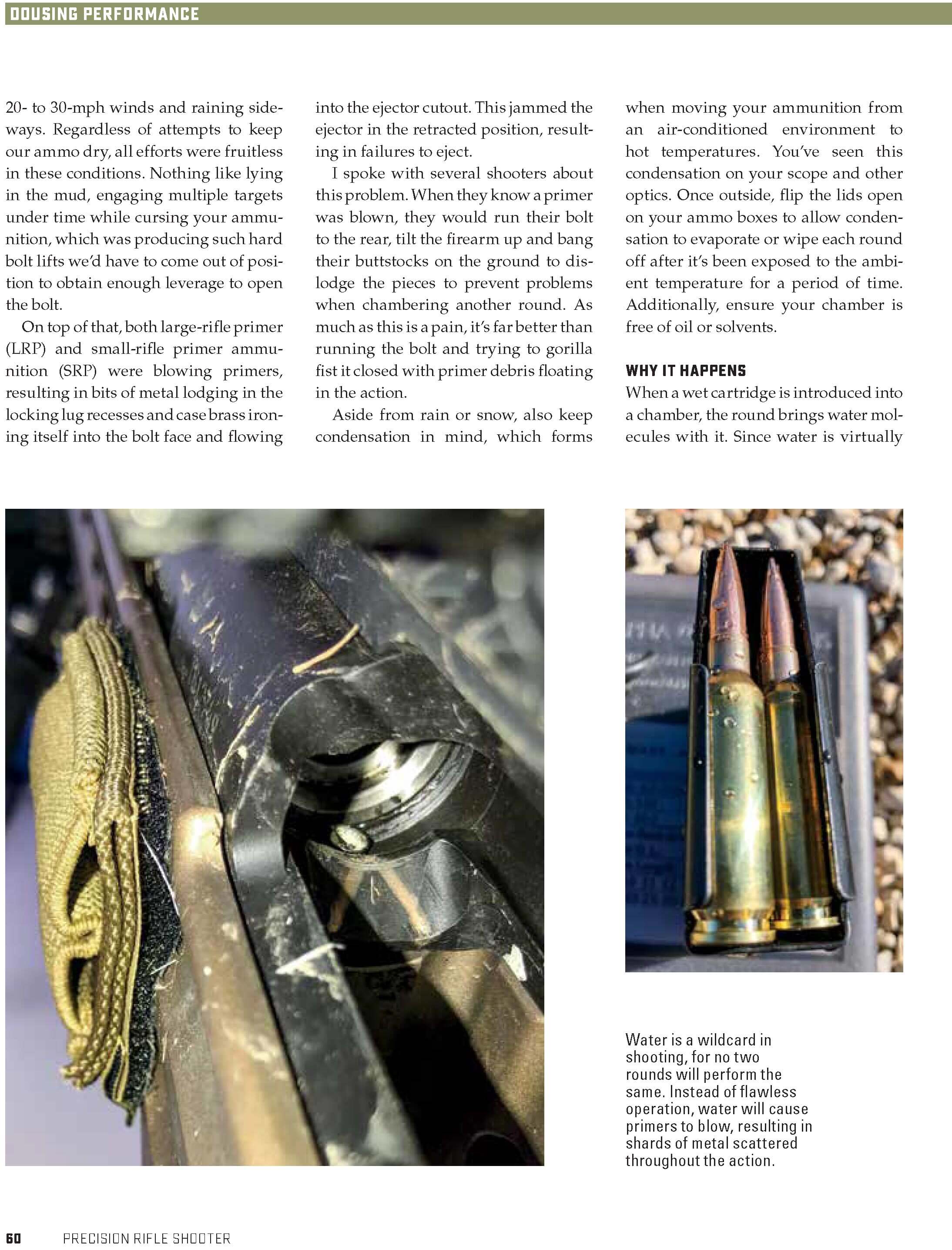
On top of that, both large-rifle primer and small-rifle primer ammunition were blowing primers, resulting in bits of metal lodging in the locking lug recesses and case brass ironing itself into the bolt face and flowing into the ejector cutout. This jammed the ejector in the retracted position, resulting in failures to eject.
I spoke with several shooters about this problem. When they know a primer was blown, they run their bolt to the rear, tilt the firearm up and bang their buttstocks on the ground to dislodge the pieces to prevent problems when chambering another round. As much as this is a pain, it is far better than running the bolt and trying to force it closed with primer debris floating in the action.
Aside from rain or snow, keep condensation in mind, which forms when moving ammunition from an air-conditioned environment to hot temperatures. You have seen this condensation on your scope and other optics. Once outside, flip the lids open on your ammo boxes to allow condensation to evaporate or wipe each round off after it has been exposed to the ambient temperature. Also ensure your chamber is free of oil or solvents.
When a wet cartridge is introduced into a chamber, the round brings water molecules with it. Since water is virtually incompressible, this limits the internal chamber space and the ability for the brass to expand, increasing chamber pressure.
If the ammunition is near the top of the pressure scale to begin with, unsafe pressure levels are almost guaranteed. If the load is mild or moderate, pressures will increase but perhaps not to dangerous levels.
When loading ammo, consider other factors that could exacerbate a wet ammunition occurrence. Examples include loading near maximum pressure or velocity with temperature-sensitive powders, testing in cool temperatures and shooting in hot temperature and high humidity conditions. I have seen these conditions skyrocket pressures with the same dangerous results.
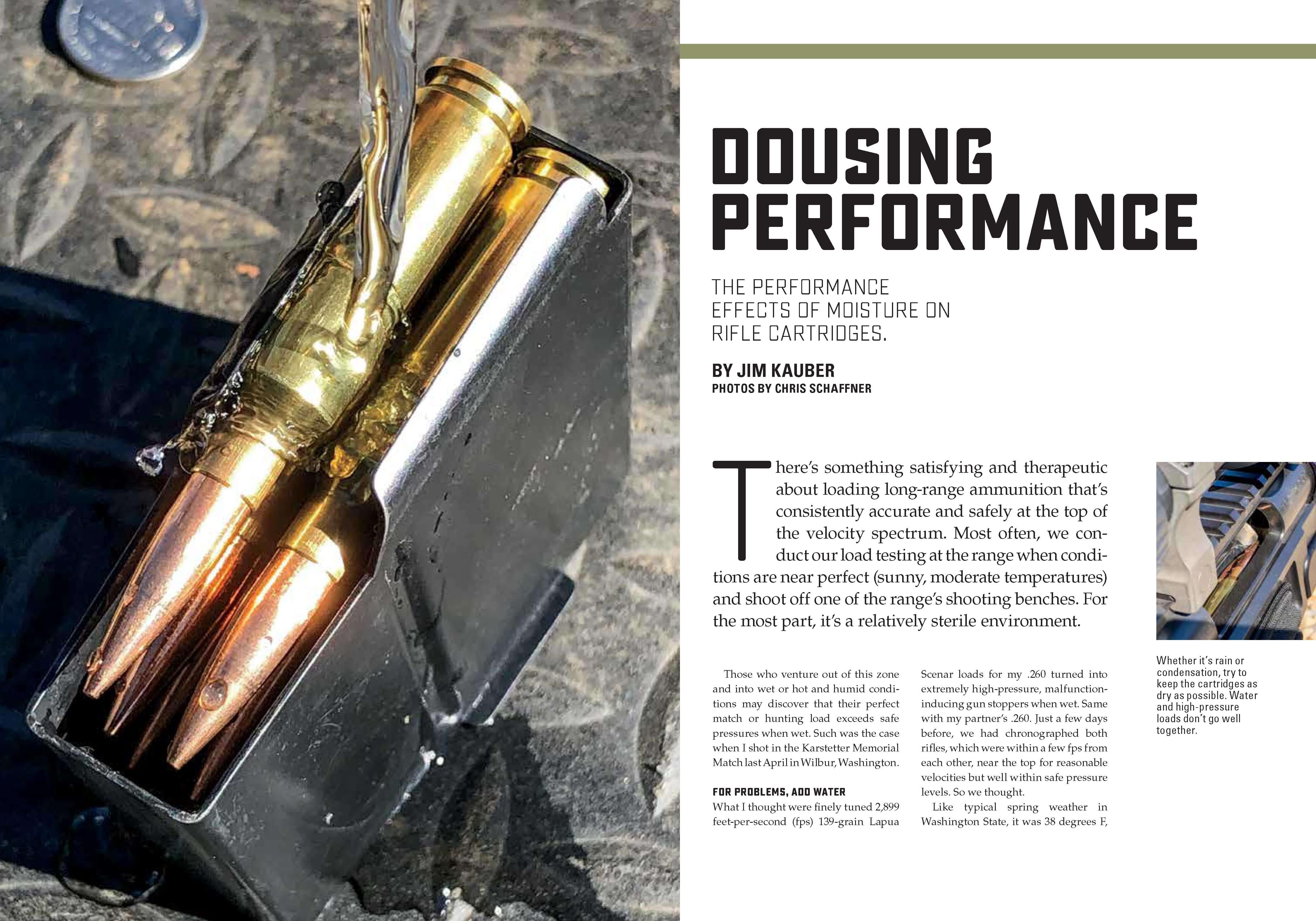
With a box of loaded ammo, I chronographed 10 dry rounds and then did the same with 10 more that were wet from pouring water on them while in the magazine. As expected, the wet rounds produced noticeably higher pressures, including stiff bolt lifts and pronounced ejector marks, but not blown primers.
One would think that along with increased pressures would come significant increases in velocity. Actually, just the opposite occurs. Water on the case no longer allows the brass to expand evenly to fill the chamber walls. In the normal ignition pressure sequence, energy expended in accelerating the projectile down the barrel is now channeled toward the rear of the case into the bolt face.
The chronograph results speak for themselves: higher pressure, lower average velocities, and extreme spreads and standard deviations three times that of dry ammunition. Ten dry rounds averaged 2,744 fps with a 5 fps standard deviation and 15 fps extreme spread. Ten wet rounds averaged 2,731 fps with a 15 fps standard deviation and 44 fps extreme spread.
Hopefully you will not experience these issues, but if you do, perhaps this will give you insight into the cause and remedy.
There are certain things to consider where damp or wet ammunition is a possibility. First, is it essential to eke out that last bit of velocity for less bullet drop or less wind drift? If so, ask whether these max-pressure loads will be worth that extra velocity when they end up wet and are now causing unplanned pressure-related malfunctions, destroying your match mindset or endangering your health.
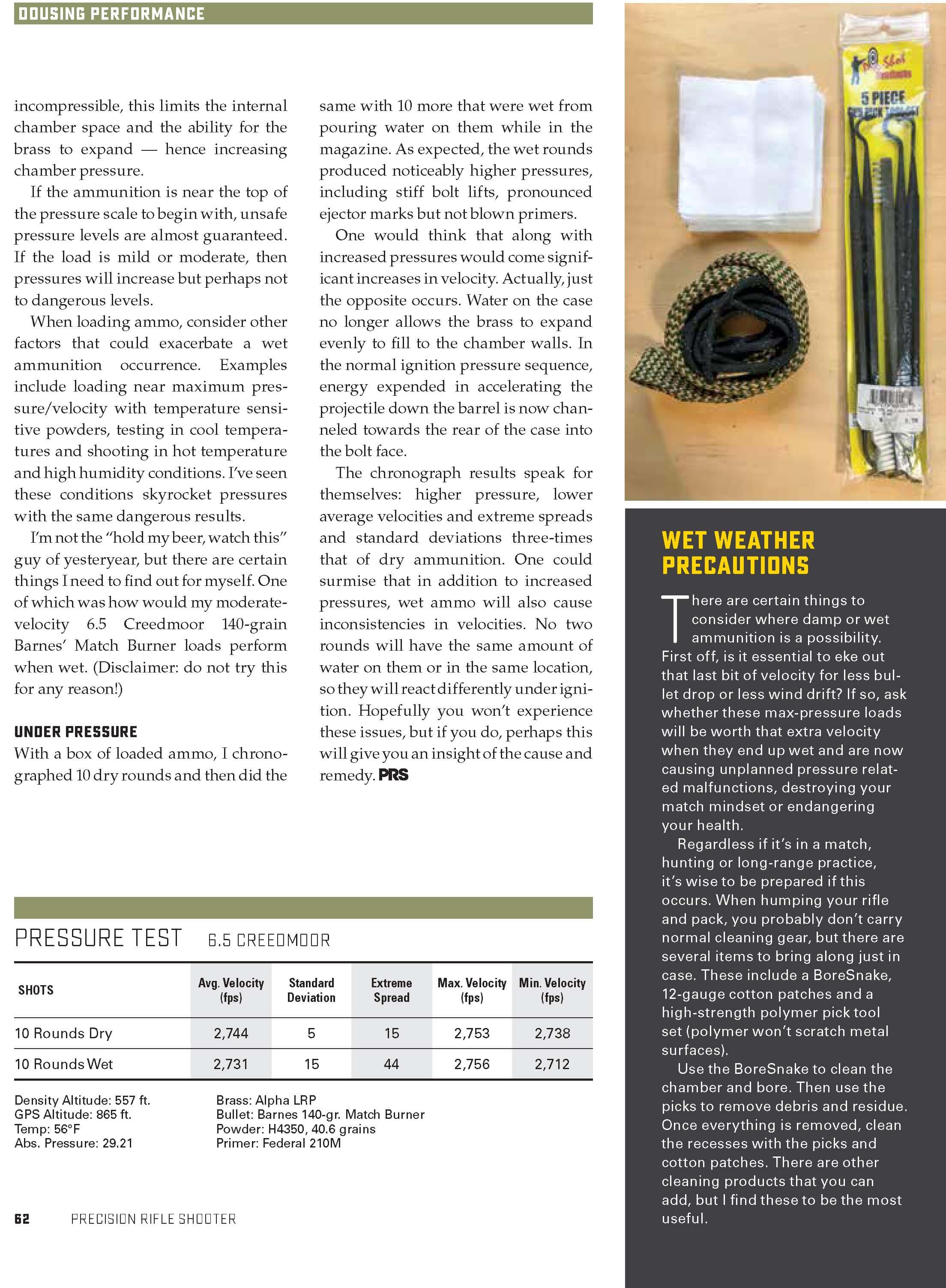
Regardless if it is in a match, hunting or long-range practice, it is wise to be prepared if this occurs. When carrying your rifle and pack, you probably do not carry normal cleaning gear, but there are several items to bring along just in case. These include a BoreSnake, 12-gauge cotton patches and a high-strength polymer pick tool set, since polymer will not scratch metal surfaces.
Use the BoreSnake to clean the chamber and bore, then use the picks to remove debris and residue. Once everything is removed, clean the recesses with the picks and cotton patches.
This article was originally published in print.
Purchase at osgnewsstand.com